
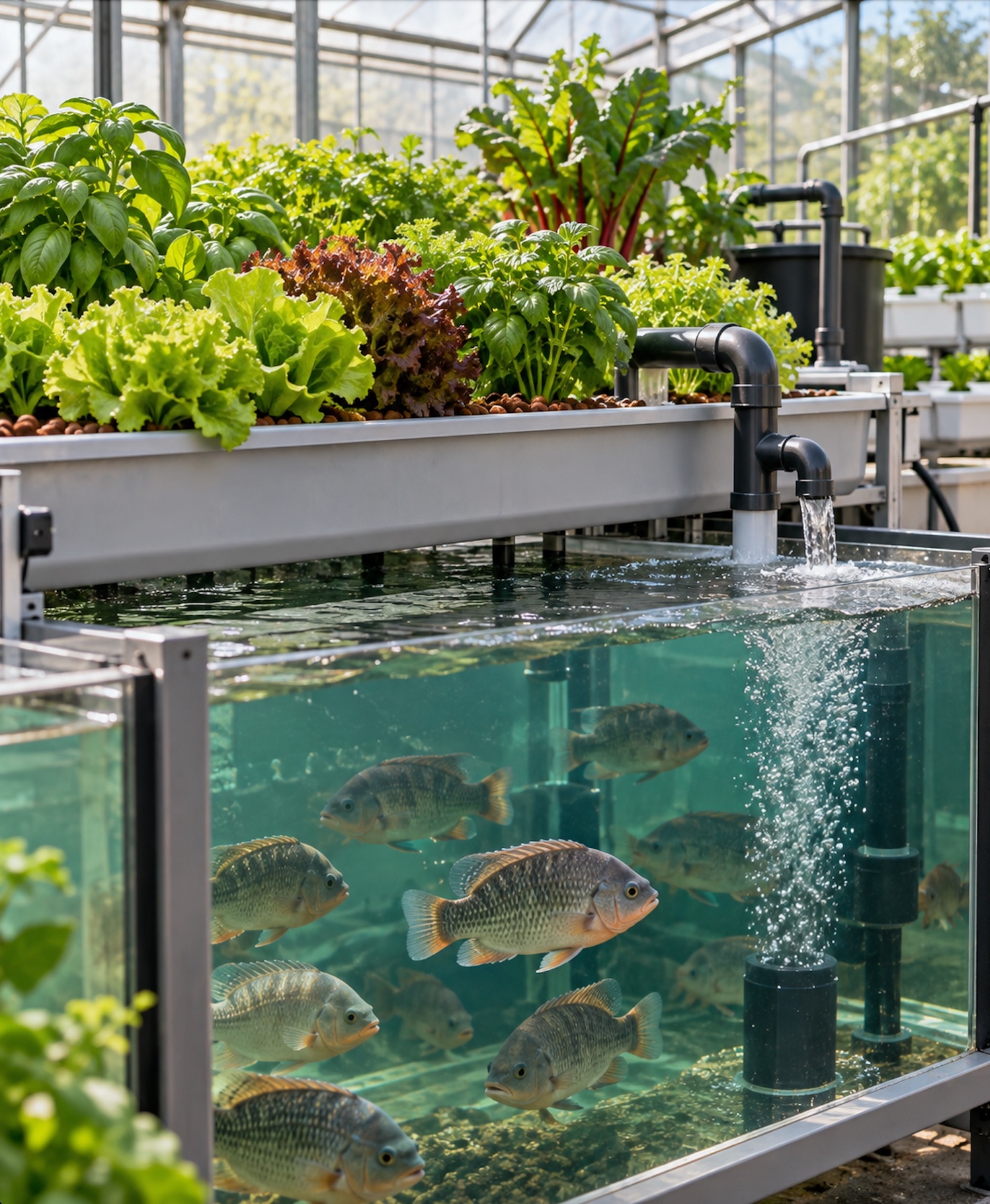
Aquaponics combines aquaculture and hydroponic growing in a single recirculating system. Fish, plants and microorganisms interact through the same water circuit, turning nutrients produced within the system into a resource for plant growth.
The principle is easy to understand, but successful aquaponics depends on coordinating biological processes, water quality and the needs of both aquatic life and plants.
What is aquaponics?
Aquaponics is a growing method that combines the farming of fish or other aquatic organisms with soilless plant cultivation. Instead of operating as two separate activities, aquaculture and plant production are connected through a shared water circuit.
Nutrients originating from fish waste are transformed by microorganisms into forms that plants can absorb. Water is then recirculated through the installation, creating a system in which resources are continuously reused.
How does an aquaponic system work?
Fish are fed and naturally release waste products into the water. Among these is ammonia, which can become harmful if it accumulates.
Beneficial nitrifying bacteria convert ammonia first into nitrite and then into nitrate, a form of nitrogen that plants can use. The nutrient-rich water reaches the growing area, where the roots absorb available nutrients.
The water then continues through the circuit and returns to the aquatic section. Filtration systems can also be used to manage solid waste and maintain suitable water conditions.
The efficiency of this cycle depends on the relationship between fish stocking and feeding, biological filtration and plant nutrient demand.
How can aquaponic systems be configured?
The plant-growing section can be designed in different ways. Among the most common configurations are:
- media-based systems, where plants grow in beds filled with an inert growing medium;
- DWC or raft systems, where plants are supported above the water while their roots remain immersed;
- NFT systems, where a shallow flow of water continuously passes along the roots.
The most appropriate solution depends on the crops, aquatic species, available space, scale of production and objectives of the project. Whatever the configuration, the different components need to work under compatible operating conditions.
What are the main benefits of aquaponics?
One of the most distinctive advantages of aquaponics is the reuse of nutrients within the system. Compounds originating from fish production become part of the nutrient cycle that supports plant growth.
Water is also recirculated rather than continuously replaced, although some losses naturally occur through evaporation, plant transpiration and normal system operation.
Like hydroponics, aquaponics allows plants to be grown without agricultural soil, making it suitable for controlled environments such as greenhouses and indoor installations. It also makes it possible to combine plant and aquatic production within the same system.
This circular use of resources is one of the most interesting aspects of aquaponics, but it also requires coordinated management. Plant requirements, aquatic life, biological filtration and water quality all need to be considered together.
Where is aquaponics used?
Aquaponics can be used at very different scales.
Small home and hobby systems provide an accessible way to combine plant cultivation and fish keeping within the same installation.
Aquaponics is also used in educational and research environments, where it offers a practical way to study nutrient cycles, water chemistry and the interaction between different biological processes.
Larger systems can be developed in greenhouses and controlled growing environments, while professional installations combine aquaculture and plant production on a larger scale.
Which parameters need to be controlled in aquaponics?
Because the different biological components depend on the same water circuit, water quality is central to aquaponic management.
Among the main parameters to monitor are:
- water temperature;
- pH;
- dissolved oxygen;
- ammonia;
- nitrite and nitrate levels;
- water flow and circulation;
- fish feeding and stocking levels.
These parameters interact continuously. For example, pH affects both nutrient availability and bacterial activity, while dissolved oxygen is important for aquatic life, plant roots and biological filtration.
Why is water temperature important in aquaponics?
Because it affects several components of an aquaponic system at the same time.
Different fish species and crops thrive within specific ranges, while nitrifying bacteria are also sensitive to thermal conditions. Warmer water also holds less dissolved oxygen, which is essential for fish, roots and the microorganisms involved in biological filtration.
Changes can also influence fish metabolism and bacterial activity, so stability is often just as important as reaching a specific target value.
There is no universal “right temperature” for aquaponics. The aim is to maintain conditions suited to the specific combination of aquatic species, plants and microorganisms within the system.
Temperature management in aquaponics
In aquaponics, managing water temperature means considering the needs of the entire living system.
TECO PONIC develops cooling solutions for aquaponic installations of different sizes and configurations, helping maintain stable water temperatures according to the requirements of each setup.
From conventional chillers to Drop-in units, with a heat exchanger immersed directly in the tank or reservoir, different options make it possible to integrate cooling according to the characteristics of the installation.
One water circuit, different biological needs: temperature control helps keep them working together.


